

Category: Brothers That Just Do Gutters

El Niño Is Coming: How to Get Your Orange County Gutters Ready for a Wet Winter

El Niño is back in the news, and this one looks big. NOAA’s Climate Prediction Center gave its update on September 10, 2026. It put the odds of a very strong El Niño this fall and winter at better than 90 percent. It also gave a 75 percent chance that this will be the strongest event since record-keeping began in 1950.

For Orange County homeowners, the useful question is a simple one: are your gutters ready if this turns into a wet winter? Here’s what El Niño does and doesn’t promise, and a pre-storm check you can start this weekend.

What a Strong El Niño Means for Orange County

A strong El Niño raises the odds of a wet Southern California winter. It doesn’t guarantee one. NOAA says the same thing in its update: with an event this strong, the usual El Niño effects are more likely, though not guaranteed.

History shows the range. Jan Null’s California El Niño climatology on ggweather.com tracks rainfall by region. Here’s how the South Coast region, which includes Orange County, did in the three very strong El Niño winters on record:

  • 1982 to 83: about 195 percent of normal rainfall
  • 1997 to 98: about 198 percent of normal
  • 2015 to 16: about 72 percent of normal

So two of the three roughly doubled the usual rain, and one came in drier than normal. The sensible plan is to prepare for wet and not panic about it.

The good news is that getting your gutters ready is the same work either way, and it pays off in any rainy season. In Anaheim, most of the year’s rain falls between November and March. Clear, well-pitched gutters are what carry that water off the roof and away from the house.

Your Pre-Storm Gutter Check

The best time to do this is now, while it’s still dry. You can do most of it from the ground.

1. Debris in the Gutters and Downspouts

Start with what’s in the gutters. Orange County trees drop something almost every month: sycamore and liquidambar leaves in late fall, eucalyptus bark, pine needles, palm fronds. A Santa Ana wind can refill a clean gutter in a day or two. From the ground, look for leaves or seedlings sticking up over the edge. Pay close attention to the downspout openings, because that’s where most clogs start. If they’re packed, it’s time for a gutter cleaning.

2. Pitch and Hangers

Gutters need a slight slope toward the downspouts, or water just sits in them. Look down the length of each run. A gutter that sags between hangers, or has pulled away from the fascia, won’t drain the way it should. Loose hangers matter more in a wet winter, because a gutter full of water is heavy. If you run a hose into the gutter and it pools instead of flowing, the pitch needs attention.

3. Corners and Outlets

Seams at the corners and outlets are where gutters most often leak. Sealant dries out over a long, hot Orange County summer. Look for rust spots, drip marks on the ground below a corner, or gaps where the gutter meets the downspout. These are small fixes in October. In the middle of a storm they’re a different story.

4. Where the Downspouts Discharge

Follow each downspout to where it ends. The water should come out a few feet from the foundation, onto ground that slopes away from the house. Extensions and splash blocks get knocked loose by gardeners and kids, so check that they’re still in place. If you’re in Anaheim Hills or another hillside neighborhood, make sure water isn’t running onto a slope where it can wash out soil. If your downspouts tie into underground drains, run water through them. You want to see it come out the other end.

5. Signs From Last Winter: Overflow Streaks and Soft Fascia

Your house will tell you where last season’s water went. Look for dark streaks on the stucco or siding under the gutter line, stained soffits, or peeling paint along the edge of the roof. Those usually mean water went over the gutter instead of through it. If you can safely reach the fascia board behind the gutter, press on it. Wood that feels soft or spongy has been taking on water. Fix it before the rain, not after. Our gutter repair team handles re-pitching, resealing and fascia problems.

Know Where DIY Ends

A lot of this check is fine to do yourself. If you have a single-story home, a sturdy ladder and a dry day, you can look into the gutters and clear light debris at the corners.

Two-story homes and steep rooflines are not a DIY job. A tall ladder on uneven ground is where most gutter injuries happen. Clay and concrete tile roofs, which are common across Orange County, can crack under your feet. That work is better left to a crew with the right equipment. There’s no shame in it. It’s just the right call.

Don’t Wait for the First Storm

Gutters are easiest to fix in dry weather. Once the rain starts, a small leak or a sagging run is harder to reach, harder to seal, and more likely to send water where it shouldn’t go. A quick check in October or early November covers you whether this winter turns out like 1997 or like 2015.

Frequently Asked Questions

Does El Niño mean Orange County will have a wet winter?

It raises the odds, but it doesn’t guarantee it. In two of the three very strong El Niño winters on record, the South Coast got roughly double its normal rain. In the third, 2015 to 16, it got about 72 percent of normal.

When should I get my gutters ready for El Niño?

October to early November is ideal, before the first real storm. If a strong Santa Ana wind blows through after your cleaning, take another look from the ground.

Can I check my own gutters before the rainy season?

Much of it, yes. You can spot overflow streaks, sagging runs and downspout problems from the ground. Single-story homes are manageable with a sturdy ladder. For two-story homes or steep roofs, it’s safer to have a professional do it.

Get Ready Before the Rain

We’ll check your gutters, downspouts and fascia and tell you plainly what needs attention and what doesn’t. Schedule your free pre-season inspection or call (714) 276-6631.
How Often Should You Clean Your Gutters in Orange County?

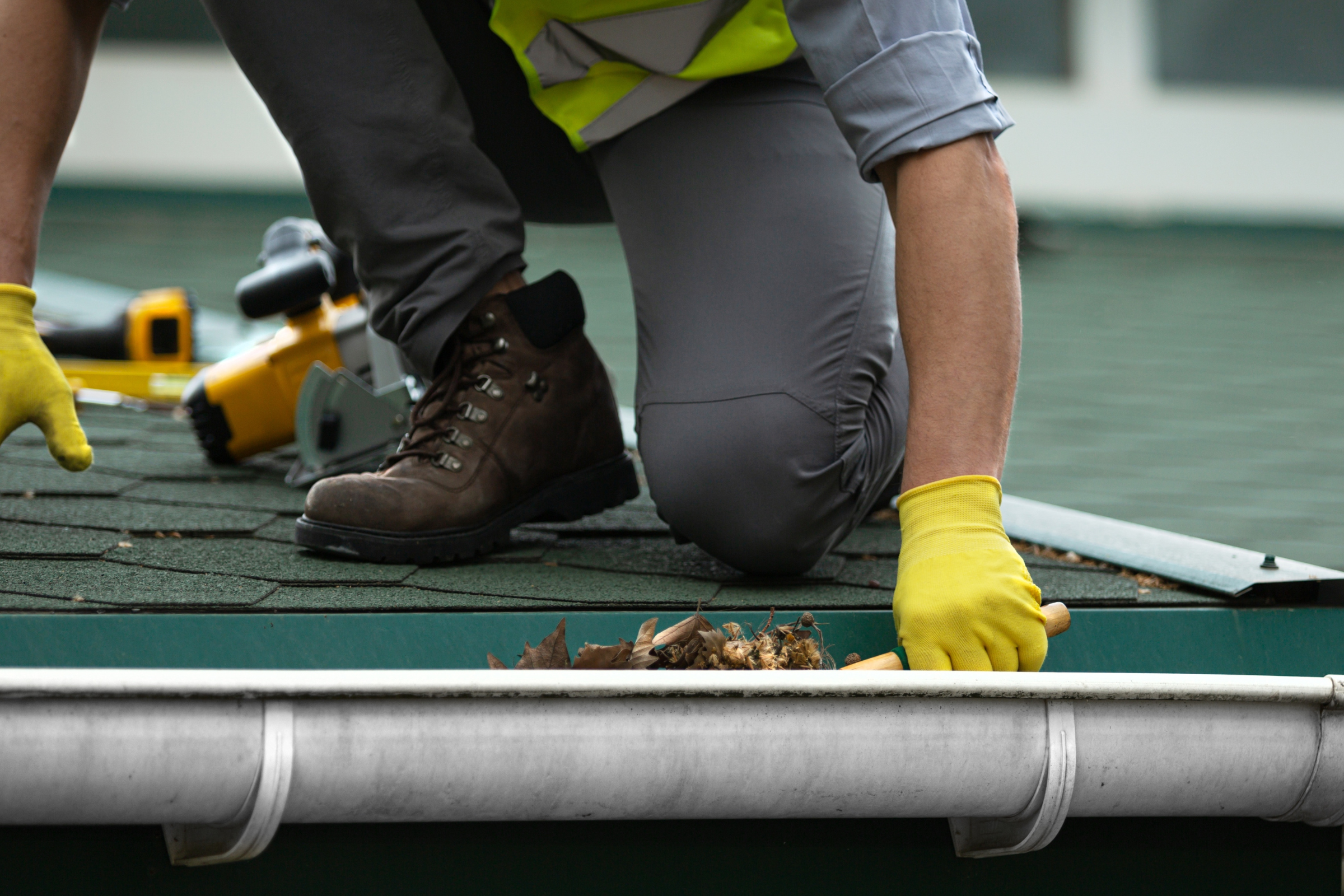
Gutter technician kneeling at a roof edge, clearing leaves and debris beside the gutter

Quick answer

How often should you clean gutters in Orange County? For most Orange County homes, twice a year is the right baseline. Clean once in late fall, before the rainy months, and once in late spring, after the spring bloom and seed drop. If your roof sits under heavy tree cover, or you live up in Anaheim Hills or near the canyons where the Santa Ana winds hit hardest, plan on three or four cleanings a year. Sometimes a quick check after a big wind event is enough. Call (714) 276-6631 or get a free estimate.

That’s the short answer. The longer answer depends on what’s growing over your roof and when it lets go. Most gutter advice is written for places where every leaf falls in one week in October. Orange County doesn’t work like that.

Why Orange County Gutters Follow a Different Calendar

Two things set the schedule here: the trees and the rain.

Our trees drop something almost every month of the year. Some shed in late fall, some bloom in spring, and some shed all year long. Gutters don’t fill up once and stay full. They fill up slowly, then all at once after a windy week.

The rain comes in a short window. According to NOAA’s 1991 to 2020 climate normals for the Anaheim station, the city averages about 13.5 inches of rain a year. Roughly 11.4 inches of it falls between November and March. January averages 3.16 inches and February 3.05 inches. October averages just 0.62 inches, and summer is close to bone dry.

So the goal is simple. Your gutters should be clear when that November-to-March window opens, and they should stay clear through it.

What Actually Lands on Orange County Roofs

The trees on your street decide your schedule more than anything else. Here’s what we pull out of gutters across our service area.

Sycamore and Liquidambar Leaves (Late Fall into Winter)

In Southern California these trees drop late. Liquidambars (sweetgums) often color up in November and keep dropping leaves and spiky seed balls into January. Sycamore leaves are big and flat and mat down fast once they get wet. If you clean in early October, these trees may not have started yet.

Jacaranda Blossoms and Seed Pods (Late Spring and Summer)

Those purple streets in May and June are beautiful. The blossoms are also soft and sticky, and they turn into a paste in the gutter that holds water. Jacarandas drop woody seed pods too, and those roll straight to the downspout opening.

Eucalyptus Bark and Leaves (Year Round)

Eucalyptus sheds constantly. It drops long strips of bark and narrow leaves, and more of both in the warm months. The bark strips are good at bridging across a downspout and catching everything behind them.

Pine Needles (Year Round)

Needles slip through gaps, knit together into a mat, and pack into the elbows of downspouts. A few pines near the house can keep a gutter half-full all year.

Palm Fronds and Fruit

Palms are common from the coast inland. Dead fronds, the stringy fiber from the trunk, and dates or seeds from queen palms all end up on the roof. A single frond can sit across a gutter and dam it.

Wind-blown Debris After Santa Ana Events

Santa Ana winds usually blow from fall through early spring. After a strong one, gutters fill with leaves from trees that aren’t even on your property, along with dust, grit and twigs. A gutter cleaned in late September can be full again by Thanksgiving. That’s not a sign the first cleaning was bad. It’s just the wind.

How Your Neighborhood Changes the Answer

Our service area covers a lot of different ground, and the right schedule changes with it.

Coastal Homes (Huntington Beach, Long Beach)

There’s often less tree cover here, so twice a year usually covers it. Watch for palms, and for fine sand and grit that settles in the bottom of the gutter and slows the flow.

Central Orange County (Anaheim, Fullerton, Garden Grove, Santa Ana, Tustin, Buena Park, Westminster, Fountain Valley, Stanton, Midway City, Lakewood)

These are established neighborhoods with mature street trees: sycamores, liquidambars, jacarandas and plenty of pines. Twice a year is the baseline. Houses right under a big tree often need a third cleaning.

Foothill and Canyon Neighborhoods (Anaheim Hills, Santa Ana Canyon, Orange, Villa Park)

These homes get more eucalyptus, more oaks and pines, and more exposure to the Santa Ana winds as they come down the canyons. Three or four cleanings a year is common. We’d also suggest a quick look after any big wind event.

A Simple Seasonal Gutter Maintenance Checklist

You don’t need to be on the roof to use this list. Most of it you can check from the ground or from a sturdy ladder at the corners.

Fall (October to November)

  • Schedule your main cleaning for late fall, after the sycamores and liquidambars start dropping, and before the rain picks up in December.
  • Look at the downspout openings. That’s where clogs start.
  • Walk the house during the first real rain. Water spilling over the edge usually means a clog or a low spot.
  • After a Santa Ana event, take a look from the ground. If you see leaves sticking up over the edge, it’s time.

Winter (December to February)

  • These are the wettest months, so this is when a clog does the most harm. Keep an eye on the gutters after each storm.
  • Check that downspouts are sending water away from the foundation, not pooling next to it.
  • Watch for gutters pulling away from the fascia or sagging between hangers.
  • If you’re under heavy trees or in the canyons, a mid-winter cleaning is often worth it.

Spring (March to May)

  • Once the last storms pass, look for anything winter loosened: separated seams, loose elbows, drips at the corners.
  • Book your second cleaning for late spring, after the jacarandas finish blooming.
  • Trim branches back from the roofline if they’re touching it.

Summer (June to September)

  • It’s dry, so this is the easiest time to handle repairs, adjustments or new gutters.
  • Clear out jacaranda pods and eucalyptus bark before they bake into the gutter.
  • If you keep cleaning more often than you’d like, summer is a good time to look at gutter guards.

When a Maintenance Program Makes Sense

Most people don’t forget to clean their gutters on purpose. Life just gets busy, and the first sign they were due is water coming over the edge in January.

That’s why we offer a gutter maintenance program. We send you a reminder when it’s time. The crew cleans the gutters, flushes the downspouts, elbows and joints, and handles minor fixes like re-pitching a gutter or re-securing a loose hanger. Then they sweep up before they leave. You don’t have to track the calendar, because we do.

If you’d rather schedule one visit at a time, you can learn more about our gutter cleaning service.

Can Gutter Guards Cut Down How Often You Clean?

Yes, for a lot of Orange County homes. Guards keep leaves, pods and palm debris out of the gutter so water can still get in. That matters most if you’re under eucalyptus or pines, or if the Santa Anas refill your gutters every few weeks.

Guards don’t mean you never think about your gutters again. Fine grit and small needles can still collect on top and need an occasional rinse. But for many homes, guards turn three or four cleanings a year into a quick check. You can read more about how our gutter guards work.

Frequently Asked Questions

How often should gutters be cleaned in Southern California?

Twice a year works for most homes: once in late fall before the rainy season, and once in late spring after the spring bloom. Homes under heavy tree cover or near the canyons often need three or four cleanings a year.

What is the best month to clean gutters in Orange County?

Late fall, usually November, is the most important cleaning. By then the sycamores and liquidambars have started dropping, and the wettest months are still ahead. Late spring, around May or June, is the second-best time, after the jacarandas finish.

Do Santa Ana winds really affect my gutters?

Yes. Strong Santa Ana winds can fill a gutter with leaves, twigs and grit in a day or two, including debris from trees on other properties. If a big wind event hits after your fall cleaning, it’s worth a quick look from the ground.

Do I still need to clean my gutters if I have gutter guards?

Less often, but yes. Guards keep most debris out of the gutter. Small needles and grit can still build up on top, so plan on an occasional check and a light rinse.

Free estimates

Let’s Get Your Gutters on the Right Schedule

Not sure how often your home needs a cleaning? We’re happy to take a look and give you an honest answer, with a free, no-pressure written estimate from a local Solutionist.

The Brothers That Just Do Gutters · Anaheim · (714) 276-6631 · Crews roll out of Fountain Valley across North Orange County

Licensed, Bonded & Insured · California Contractor License #1145336